
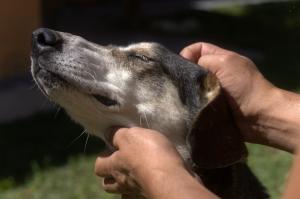
This guide explains the dog itch scratch cycle, why itching and scratching can quickly become a self-perpetuating problem, and what you can do to break the cycle before it leads to more serious skin issues.
| Key Takeaways
|
The constant scratching, restlessness and a dog that just can’t get comfortable. Your dog’s itchiness can be miserable for them and you. And here’s the bit you maybe don’t realise: itch isn’t just a symptom, it can become part of the problem.
Welcome to the itch–scratch cycle, and why breaking it early matters more than you might think.
What is the itch–scratch cycle?
It starts with a trigger.
That might be:
- Parasites such as fleas or mites
-
Environmental allergies (like pollen or dust)
-
Food sensitivities
-
An insect bite
-
Dry or irritated skin
Your dog feels itchy… so they scratch. But scratching doesn’t solve the problem, it damages the skin. And once that skin barrier is weakened, things can escalate: Bacteria and yeast can take advantage, leading to infection, inflammation increases, and the skin becomes even more damaged.
This makes your dog even itchier… so they scratch more… and round it goes. What starts as mild irritation can turn into a much bigger skin problem surprisingly quickly. This makes it much harder to treat and creates more misery for everyone.
Why ‘waiting it out’ rarely works
It’s natural to hope things might settle on their own, but skin issues unfortunately don’t tend to follow that script.
Once the itch–scratch cycle kicks in, the skin barrier is already compromised so secondary infections can develop. This means that inflammation and sensitivity only worsen over time.

What can help
To break the cycle, you need something that will soothe the itch, stop the scratching and limit further damage to the skin.
Things that can help at home:
- Regular parasite prevention (fleas can be a major trigger)
-
Gentle grooming to remove allergens and debris
-
Rinsing their paws and belly after walks during high pollen seasons
-
Keeping bedding clean (wash at 60 degrees)
-
Dog-friendly moisturising balms for dry or irritated noses and paw pads
Things that don’t fix the problem
There are a few myths when it comes to fixing your dog's itching problem:
- Bathing too frequently (this can dry the skin out and worsen irritation)
-
Trying lots of creams or potions – especially those that aren’t designed for dogs, are highly scented or home remedies
-
Relying on physical barriers such as buster collars alone to stop scratching – it can drive your dog mad not being able to reach that niggle!
-
Ignoring it and hoping it passes
Whatever you try at home might ease things slightly, but it likely won’t completely stop the cycle once it’s underway.
The key to breaking the cycle
You need to stop that itch dead in its tracks, or the cycle just keeps spinning. Properly hitting the brakes on itch means addressing the root cause and any contributing factors.
This is where your vet comes in, as they can:
- Identify what’s triggering the itch (parasites, allergies, infection, or a combination)
-
Treat any secondary infections
-
Use medications to quickly calm the irritation and inflammation
-
Advise on the correct use of physical barriers to stop further damage by scratching
-
Put a plan in place to stop the itch coming back
Don’t let a small itch become a big problem
Dogs are brilliant at getting on with things, even when they’re uncomfortable. By the time itching becomes obvious, things have often already progressed further than you think.
Get your dog booked in for a vet check-up if they are:
- Scratching more than usual
-
Struggling to settle
-
Damaging their skin
-
Just not quite themselves
Act early to stop a short-term irritation turning into a long-term issue and get your dog back to feeling like themselves again.

Written by: Zoetis (Guest Author)