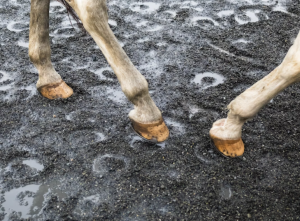
Mud fever in horses can be a frustrating and recurring condition for horse owners - especially during wet, muddy seasons. In this guide, we’ll explore what mud fever is, what causes it, how to recognise it early, and the best ways to treat and prevent it for good.
| Key Takeaways
|
What is Mud Fever?
Mud fever, also known as Pastern Dermatitis, is a bacterial skin infection that affects the lower legs and feet of horses. It is most common during winter and early spring, when wet and muddy ground conditions weaken the skin and create the perfect environment for bacteria to thrive.
The condition is characterised by redness, swelling, and painful sores or scabs, often accompanied by hair loss and a foul-smelling discharge. If left untreated, the infection can spread further up the leg, becoming chronic and more difficult to manage.
What Causes Mud Fever?
Mud fever occurs when constant exposure to moisture, mud, and grit damages the skin’s protective barrier. This allows bacteria such as Dermatophilus congolensis, Staphylococcus, or fungi and mites to invade.
Contributing factors include:
- Prolonged turnout in wet or boggy paddocks
-
Mud and sand abrasion to the skin
-
Dirty or damp bedding
-
Untreated cuts or abrasions
-
Although not always directly contagious, mud fever can spread between horses through sharing grooming supplies, boots, and wraps - so good hygiene is essential.
Note: Horses with heavy feathering or light (non-pigmented) skin tend to be more susceptible, as moisture and mud easily get trapped in the hair.

Mud Fever Symptoms
Early detection is vital. Mud fever often starts subtly but can escalate quickly if ignored.
Common symptoms include:
-
Redness, heat, and swelling around the pastern or heel
-
Crusty, scabby skin with matted or missing hair
-
Moist, pink sores or lesions beneath the scabs
-
Oozing sores with white, yellow, or green discharge
-
Pain or sensitivity when touched
-
Lameness in severe cases
Important: It’s a good idea to check your horse’s legs regularly, particularly during wet or muddy weather.
How to Treat Mud Fever in Horses
As with most conditions, prevention is better than cure. Mud fever can be stubborn and recurrent, so taking early action - and keeping your horse’s legs clean and dry - is key to managing and preventing flare-ups.
If your horse is already showing signs of mud fever, act quickly to prevent it from worsening.
1. Clean the area gently
- Use a mild antiseptic wash - Botanica Cleansing Wash is a natural wash that promotes healing and is usually tolerated well by horses.
-
Carefully remove only soft, moist scabs - avoid picking dry ones as this can worsen irritation.
2. Dry thoroughly
- Pat the area dry with a clean towel and ensure the area is kept as dry as possible.
-
If possible, leave the sores exposed to air to help them heal faster.
3. Apply treatment
- Use mild disinfectants, medicated shampoos, or antiseptic cream to fight infection.
-
Anti-inflammatory ointments can also help soothe soreness and reduce swelling - Botanica Natural Herbal Cream is a good non-prescription choice.
4. Protect and rest
- Keep the legs clean and dry at all times.
-
Avoid wrapping wet legs - if using bandages, only apply after the skin has been properly cleaned and treated.
-
Stable your horse during severe weather to keep legs dry and prevent re-infection.
If left untreated, mud fever can progress quickly and, in severe cases, may require antibiotic or antifungal treatment prescribed by a vet.
Prevention Tips
To help reduce the risk of mud fever developing:
-
Keep legs clean and dry. Horses stabled in clean, dry, non-irritating bedding are far less likely to develop mud fever.
-
Avoid constant exposure to wet, muddy conditions. Rotate paddocks where possible and fence off particularly boggy areas.
-
Use barrier creams. Apply a thin layer of cream before turnout to repel moisture and mud. Popular choices include Lincoln Mud Screen, Nettex Seven Day Mud Away, and NAF Mud Gard Barrier Cream.
-
Provide nutritional support. Feed supplements like NAF Love the SKIN He’s In to help keep your horse’s skin healthy and resilient during wet, muddy conditions.
-
Don’t over-wash legs. Wait for mud to dry, then brush it off instead of repeatedly hosing down.
-
Clip heavy feathers. Trimming (not shaving) feathered hair helps the skin dry more quickly and stops mud from clinging.
-
Maintain hygiene. Disinfect grooming tools, boots, and wraps regularly to prevent bacterial spread.
Protect your Horse this Winter: Recommended Mud Fever Products
Keep your horse’s legs protected with our top-rated mud fever essentials:
-
Antiseptic Washes – to gently cleanse and disinfect affected skin - Botanica Herbal Wash.
-
Barrier Creams – to repel moisture and mud.
-
Soothing & Healing Treatments – to calm irritation and support skin repair - Botanica Herbal Cream & FiltaBac.
Shop the full Mud Fever Prevention Range here and give your horse’s legs the care they deserve.

Mud Fever FAQs
Can you ride a horse with mud fever?
It depends on the severity. Mild cases may still allow for light work, but if your horse shows pain, swelling, or lameness, rest is essential until healed.
How long does it take mud fever to heal?
With prompt treatment, mild mud fever can clear up within 1–2 weeks. Severe cases may take several weeks to fully heal.
Can mud fever cause lameness?
Yes. When inflammation and infection spread deeper into the tissue, it can cause pain, swelling, and lameness.
How to remove mud fever scabs?
Only remove soft, moist scabs after soaking with warm antiseptic solution. Forcibly removing dry scabs can cause bleeding and worsen infection.
Is mud fever contagious?
While not highly contagious, bacteria can transfer through shared grooming tools, wraps, or boots. Always clean equipment thoroughly after use.
Will mud fever heal on its own?
Unlikely. Without treatment, the infection can worsen and spread up the leg. Early intervention is key.
Can I put Sudocrem on mud fever?
Sudocrem may help soothe irritation, but it’s not a full treatment. For best results, use products specifically formulated for mud fever to combat bacteria and heal skin effectively.
Written by: VioVet