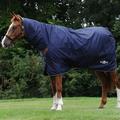
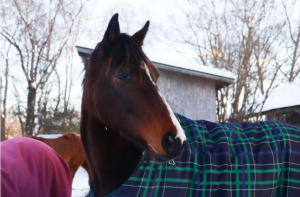
This horse rug guide is designed to help you choose the perfect rug for your horse. Learn about over-rugging, seasonal choices, rug types, and how to measure for the best fit.
| Key Takeaways
Check out our Horse Rug Range to keep your horse comfortable in every season.
|
If you’ve ever wondered, “Which rug is best for my horse today?”, you’re not alone. Deciding whether to rug, selecting the right type and weight, and knowing when to change rugs can be tricky - especially with so many options available. This guide is here to simplify the process, so let’s get started.
Over-Rugging Horses: The Risks
Before deciding which rug to use, it’s important to understand the dangers of over-rugging. It can be tempting to over-rug a horse when we feel the cold ourselves, but horses are far better adapted to winter than we think.
Unless a horse is underweight, unwell, or fully clipped, most will manage perfectly well in a medium weight turnout rug during British winters, and some may just need a rain sheet or no rug at all.
Over-rugging can lead to:
- Overheating
-
Sweating
-
Discomfort
-
Inability to lose weight naturally
In some cases, even a thin rug can actually make a horse colder by flattening their coat and reducing natural insulation. It’s essential to always check your horse regularly and adjust rugs as the weather changes.
Vet Tip: How to know if your horse is overheating/over-rugged
Our internal vet, Dr. Sophie Meers, BVetMed MRCVS, advises checking your horse regularly for signs of overheating. “Feel under the rug and check for moisture/sweat, increased respiratory rate and rectal temperature”.
Signs of overheating include:
- Sweating under the rug
-
Increased respiratory rate (heavy breathing)
-
Sometimes lethargy
If your horse is showing these signs due to over-rugging, simply removing the rug is usually all that’s needed. There’s generally no need to call a vet unless there’s an underlying clinical condition.

Types of Horse Rugs
Rugs come in many types, each serving a different purpose. Understanding the options helps you pick the right one for each situation.
1. Turnout - Outdoor/All-Weather Protection
Best for: Horses needing extra protection from the elements.
Turnout rugs are waterproof and designed for outdoor use, protecting horses from rain, wind, mud, and even sun bleaching.
They come in a range of weights (light, medium, and heavy - we cover these below!) so you can choose the right level of warmth for the season. Made from breathable fabrics with secure fastenings, turnout rugs keep horses comfortable and protected all year round.
2. Stable - Indoor Warmth and Comfort
Best for: Horses during cooler months or after clipping.
Stable rugs keep horses warm and comfortable indoors. They are breathable and insulating but not waterproof, so they’re only for use inside the stable.
Available in different weights, they also help keep the coat clean, with reinforced areas to reduce rubbing.
3. Fly - Summer/Hot Weather Protection
Best for: Horses in spring and summer months when flies and insects are present.
Fly rugs protect horses from flies, midges, and other biting insects during the warmer months.
They are especially useful for horses with sweet itch, helping to reduce irritation and discomfort. Many designs offer full coverage, including neck, belly, and tail protection.
The difference between fly vs sweet itch rugs
“Fly rugs offer generalised protection from larger flies where sweet itch rugs prevent penetration by the smaller midges (culicoides) whose saliva causes the allergic skin reaction. Sweet itch rugs have a finer, tougher mesh and a snugger full body fit with more coverage.” Dr. Sophie Meers, BVetMed MRCVS shares.
4. Coolers & Sweat Rugs - Post-Exercise or Travel
Best for: Horses after exercise, travel, or bathing to prevent chills.
Coolers and sweat rugs are designed for use after exercise, travel, or bathing. Their breathable fabrics help horses dry off gradually, preventing chills while keeping muscles warm.
They’re a practical addition to any horse’s rug collection, especially for those in regular work.
Decoding Rug Descriptions
When choosing a rug, you’ll often see terms in product descriptions that explain how warm, durable, or practical the rug is:
- Polyfill — The insulating layer, measured in grams (commonly 100–300g).
-
Denier — The strength of the outer fabric; the higher the denier, the more durable the rug.
-
Rip-stop — A special weave that helps prevent small tears from spreading.
Understanding these details makes it much easier to compare rugs and choose the right one for your horse.

Horse Rug Weight Explained
Horse rugs come in different weights - light, medium, and heavy - and the right choice depends on your horse’s type, condition, and whether they’re clipped.
- Unclipped horses often manage with minimal or no rugging, as their thick coats insulate effectively.
-
Clipped horses lose natural insulation and might require rugs, starting with lightweights in milder weather and moving to heavier turnout rugs when temperatures drop.
-
Overweight horses may only need a very light rug, or none at all, as their bodies are already carrying extra insulation. A lighter rug also helps them burn calories, as shivering is a horse’s natural way of keeping warm.
-
Older or underweight horses may need more rugging to help maintain body condition in cold weather.
Horse Rug Temperature Guide UK
You know the temperature outside, but still not sure which rug your horse needs? It can be tricky to judge, especially with so many factors to consider.
Here’s a simple guide to help you match rug weight to the weather and whether your horse is clipped:
- -0 to -5°C: Heavy turnout with neck cover (clipped) | Medium turnout (unclipped)
-
0 to 5°C: Medium turnout (clipped) | Light turnout (unclipped)
-
5 to 10°C: Light turnout (clipped) | No rug (unclipped)
-
10 to 15°C: Light turnout in rain/wind (clipped) | No rug (unclipped)
Note: This is only a guide — all horses are different and may have individual requirements.
How to Measure a Horse for a Rug
A rug that doesn’t fit properly can cause rubbing, slipping, and discomfort, so it’s important to measure accurately before buying.
Here’s a simple guide:
- Use a soft tape measure (or a piece of string) and measure horizontally from the centre of the chest to the end of the rump.
-
If you already own a rug that fits well, lay it flat on the ground and measure from the centre of the chest to the end of the rug
Rug Size Tips
-
UK sizes – Usually given in feet and inches, measured from the centre of the chest to the rear of the quarters.
-
US sizes – Given in inches, using the same chest-to-quarters measurement.
-
European sizes – Measured in centimetres, based on back length from the top of the withers to the top of the tail.
-
If your horse falls between sizes, always choose the larger size for comfort.
Ready to Rug Up?
There is no single “right” approach to rugging - it depends on your horse’s age, breed, workload, condition, and the weather. The key is to avoid over-rugging, check and remove rugs daily, and choose the correct weight and type for your horse’s needs.
Explore our full horse rug range today and find the perfect fit for your horse, whatever the season.

Written by: VioVet