
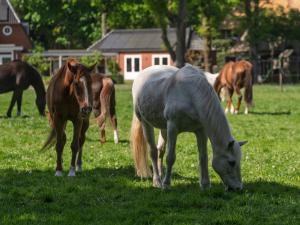
Equine Cushing’s Disease (PPID) is a lifelong hormonal disorder requiring early recognition and consistent care. In this guide, we break down how the condition develops and what you can do - from veterinary treatment to daily management - to maintain comfort and quality of life.
| Key Takeaways
Discover how Audevard EKYCUSH CONTROL can support horses with PPID and help you take a proactive approach to long-term management. |
What is Equine Cushing’s Disease ?
Equine Cushing’s disease, or Pituitary Pars Intermedia Dysfunction (PPID), is a hormonal disorder that disrupts the normal balance of the endocrine system. It develops as part of the premature ageing and dysfunction of structures within the horse’s brain - particularly the hypothalamus and pituitary gland - which is why the condition is most commonly seen in older horses.
The pathology develops gradually and may take several months or even years before clinical signs appear. This underscores the importance of a regular veterinary follow up.
Predisposition for Cushing’s
Several factors influence the likelihood of a horse developing Equine Cushing’s Disease (PPID), with age being the most significant.
- PPID affects about 21% of horses over 15 years old and up to 40% of those older than 30.
-
The condition is more frequently observed in aged horses, but younger animals can also be affected.
-
There is no evidence of a breed-related predisposition to PPID.
-
Ponies are sometimes considered more at risk, but this perception largely comes from the fact that they generally live longer and therefore represent a greater share of the older horse population.
-
Gender is also not a risk factor, as mares, geldings, and stallions develop PPID at comparable rates.

Causes of Equine Cushing’s Disease
To understand what causes Equine Cushing’s Disease (PPID), it helps to look at the part of the body that’s affected: the hypothalamus–pituitary axis.
1. The hypothalamus-pituitary axis
This system involves two key glands in the brain: the hypothalamus and the pituitary gland, which produce hormones that regulate many body functions.
- The hypothalamus releases dopamine, a hormone that normally keeps the pituitary in check.
-
The pituitary produces ACTH (Adrenocorticotropic Hormone), which stimulates the adrenal glands to make cortisol, the “stress hormone.”
-
Cortisol helps control sugar, fat, and protein metabolism, supports the immune system, and regulates sleep, appetite, and other daily rhythms.
2. What goes wrong
As the hypothalamus ages, it produces less dopamine. Without enough dopamine to control it, the pituitary gland, especially the pars intermedia, becomes overactive. This leads to:
- Excess production of ACTH
-
Increased cortisol and hormonal imbalance
-
Reduced immunity, problems processing sugar and fat, and increased breakdown of proteins
This hormonal disruption is what causes the wide range of clinical signs seen in Cushing’s-affected horses.
Equine Cushing’s Disease Symptoms
One of the particularities of PPID is that its symptoms differ from one horse to another and vary according to the stage of the disease. Some signs may not appear until the condition is already well advanced.
In addition, the early symptoms are nonspecific and can include a general decline in condition or weight loss. Early diagnosis greatly improves management and treatment outcomes, which is why it is important to be familiar with the most common signs.
If your horse is over 15 years old and shows any of these symptoms, it is advisable to arrange a veterinary examination.
The most common symptoms include:
- Failure to shed the winter coat or patchy shedding – observed in about 70% of cases, often accompanied by excessive hair growth.
-
Laminitis – affects roughly 49% of horses and is a serious complication linked to hormonal imbalances, particularly involving insulin.
-
Muscle loss (amyotrophy) – seen in 49% of cases, leading to a hollow back, overall weight loss, and an older appearance.
-
Lethargy or depression – occurs in about 41% of horses, causing reduced activity and a subdued demeanor.
-
Increased drinking and urination (PU/PD) – present in 32% of cases, sometimes accompanied by excessive sweating.
-
Neurological signs – affect around 21% of horses, and can include movement difficulties, balance problems (ataxia), or episodes of narcolepsy.
Equine Cushing’s Disease compromises the immune system, making horses more susceptible to infections and slower to heal. Common issues include skin infections like dermatophilosis and ringworm, foot abscesses, respiratory infections, and delayed recovery from injuries, as the horse becomes more vulnerable to pathogens in its environment.

Diagnosing ECD
PPID is a progressive condition, which can make early diagnosis challenging. However, starting veterinary care as soon as possible is crucial to maintain the best quality of life for ageing horses.
Diagnosis typically involves several steps:
- Initial evaluation: The veterinarian will look for visible signs such as abnormal hair growth (hirsutism) or laminitis.
-
Blood testing: A blood sample is usually taken to measure ACTH levels, which are often elevated in horses with Cushing’s.
-
Interpreting results: Because ACTH levels can fluctuate daily and seasonally, a single test may not be conclusive.
-
Additional testing: If needed, more detailed assessments can be performed, such as: Dexamethasone suppression test – compares ACTH levels before and after dexamethasone administration. TRH stimulation test – measures ACTH response after giving thyrotropin-releasing hormone.
By combining clinical signs with laboratory findings, the veterinarian can confirm the diagnosis and develop an appropriate treatment plan tailored to the horse.
Treatment for Equine Cushing’s Disease
Treatment for PPID is tailored to each horse based on their specific symptoms, which makes regular veterinary care essential. Key aspects include:
1. Medication
The current standard therapy for Cushing’s is Pergolide. Pergolide functions as a dopamine substitute, compensating for the deficiency produced by the ageing hypothalamus, and inhibits the pituitary gland to help restore normal activity, particularly by reducing ACTH production.
- There is no definitive cure for this endocrine disorder, so Pergolide must be administered daily for the horse’s lifetime.
-
Continuous veterinary monitoring is essential to adjust the dosage, track ACTH blood levels, and observe the evolution of symptoms.
-
Some side effects, such as loss of appetite, may appear at the start of treatment and require dosage adjustments. The response to Pergolide varies among horses, with individual dosage requirements.
Studies have shown that Pergolide reduces ACTH levels in 100% of treated horses and can alleviate many clinical signs, including lethargy and PU/PD. It also has a notable positive effect on laminitis and immune function. However, age-related muscle and weight loss may persist despite treatment.
2. Environmental Management
In addition to medication, maintaining an appropriate environment is vital for the horse’s quality of life. Horses with Cushing’s have weakened immunity, making infection prevention crucial.
- A clear deworming program helps reduce the risk of digestive parasite infestations, and keeping vaccinations up to date is essential.
-
Regular monitoring of the hooves and teeth also helps prevent infections in these areas.
-
For horses that have difficulty shedding their winter coat, clipping can improve comfort during summer. Clipping prevents the formation of damp areas between the skin and coat, which could promote the growth of pathogens responsible for skin infections.
3. Laminitis Prevention
Because horses with PPID are highly prone to laminitis, specific preventive measures should be considered to minimise risk:
- Limit access to grass during spring and autumn, and monitor grazing time if necessary.
-
Opt for a forage-rich diet, emphasising hay, and minimise the use of concentrated feed, especially if it is high in starch.
-
Monitor the horse's weight, as excess weight can exacerbate laminitis
Additionally, feed supplements can support the horse well-being:
Audevard EKYCUSH CONTROL is a new feed supplement specifically designed to address the needs of horses and ponies affected by PPID.
Formulated with scientifically recognised ingredients, EKYCUSH CONTROL supports horses on 3 key levels to help restore comfort and vitality:
- At the hypothalamus level: Ginkgo Biloba contains specific flavonoids that act in the brain1, while Mucuna supplies a dopamine precursor.2
-
At the pituitary level: diterpenes from Chasteberry act on the pituitary gland.3
-
Overall comfort: Cinnamon helps metabolic regulation4, and Vitamin A has an essential role for physiological brain functions.5
Comprehensive and innovative, EKYCUSH CONTROL can be used both in horses treated with pergolide and in those not receiving pergolide.
Summary
Equine Cushing’s Disease (PPID) is a complex, lifelong condition that primarily affects older horses but can appear in younger animals as well. Early recognition, accurate diagnosis, and consistent management are key to maintaining your horse’s comfort, health, and quality of life.
While there is no cure, a combination of medication, environmental care, laminitis prevention, and supportive nutrition - including targeted supplements like EKYCUSH CONTROL - can significantly improve wellbeing and reduce the impact of clinical signs.
Take action today: If your horse is over 15 or showing any signs of PPID, schedule a veterinary evaluation. Early intervention and a tailored care plan can make all the difference in helping your horse live a healthier, happier life.
Written by: VioVet
