
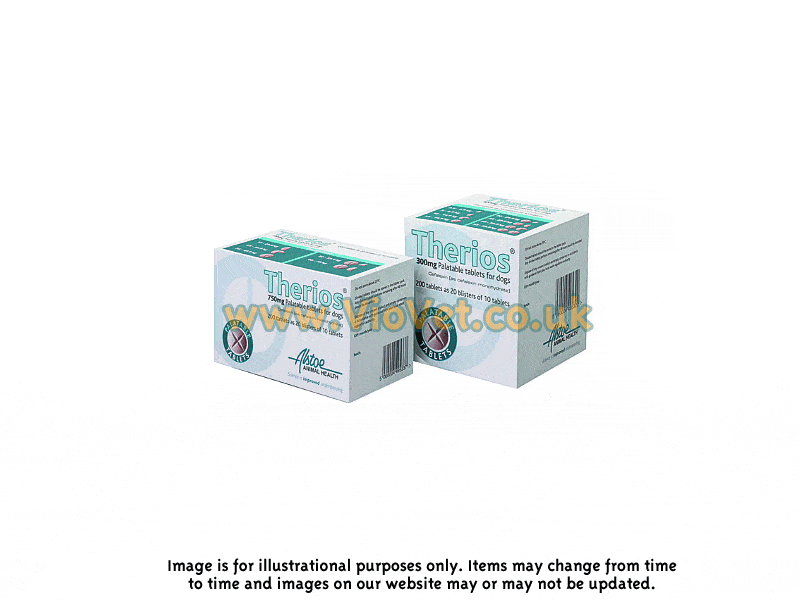
Therios are flavoured antibiotic tablets which can be given directly or in food. They contain the well known antibiotic cefalexin, which is safe and effective for many types of infection in dogs and cats. Therios is particularly used for skin infections (superficial and deep pyoderma) and urinary infections. It can also be used to treat infected wounds, and a wide range of other soft tissue infections. Therios is usually dosed twice daily. The dose rate and length of treatment course vary depending on the nature of the infection to be treated. For the full datasheet, click on the product names below.
- Product Price QTY
-
Therios Palatable Tablets » 75mg (for Cats) » Priced per TabletEstimated dispatch within 24 working hours. TVP: £0.73 Our price: £0.43 Buy
-
Therios Palatable Tablets » 300mg » Priced per TabletEstimated dispatch within 24 working hours. TVP: £1.23 Our price: £0.71 Buy
-
Therios Palatable Tablets » 750mg » Priced per TabletEstimated dispatch within 24 working hours. TVP: £2.08 Our price: £1.08 Buy
Therios 300 mg and 750 mg Palatable Tablets for Dogs
Qualitative and quantitative composition
Each Therios 300 mg tablet contains: Cefalexin (as cefalexin monohydrate) 300 mg
Each Therios 750 mg tablet contains: Cefalexin (as cefalexin monohydrate) 750 mg
Pharmaceutical form
Round scored beige palatable tablets. The tablets can be divided into equal halves and quarters
Clinical particulars
Target species
Dogs
Indications for use
For the treatment of bacterial skin infections in dogs (including deep and superficial pyoderma) caused by organisms sensitive to cefalexin.
For the treatment of urinary tract infections in dogs (including nephritis and cystitis) caused by organisms sensitive to cefalexin.
Contra-indications
Do not use in animals which are known to be hypersensitive to penicillins.
Do not use in case of severe renal failure
Do not use in rabbits, guinea pigs, hamsters and gerbils.
Special warnings for each target species
None
Special precautions for use
As with other antibiotics which are excreted mainly by the kidneys, systemic accumulation may occur when renal function is impaired. In case of known renal insufficiency the dose should be reduced.
The product is not recommended for use in dogs less than 2.5 kg bodyweight.
Wherever possible, the use of the product should be based on susceptibility testing and take into account official and local antimicrobial policies
Safety of the excipient, ammonium glycyrrhizate, has not been established in dogs less than 1 year old.
Adverse reactions
Vomiting and diarrhoea have been observed in dogs. In rare cases hypersensitivity can occur.
Use during pregnancy or lactation
Do not use in pregnant or lactating bitches.
Interactions
In order to ensure efficacy, the product should not be used in combination with bacteriostatic antibiotics.
Concurrent use of first generation cephalosporins with aminoglycoside antibiotics or some diuretics such as furosemide can enhance nephrotoxicity risks
Amounts to be administered and administration route
For oral administration. 15 mg cefalexin per kg body weight twice daily (equivalent to 30 mg per kg body weight per day) for duration of:
- 14 days in cases of urinary tract infection
- At least 15 days in cases of superficial infectious dermatitis
- At least 28 days in cases of deep infectious dermatitis
In severe or acute conditions the dose may be safely doubled to 30 mg/kg twice daily. To allow for accuracy of dosing, tablets can be halved or quartered.
To ensure a correct dosage body weight should be determined as accurately as possible to avoid under dosing.
Therios tablets are well accepted by dogs but may be crushed or added to a small quantity of food immediately prior to feeding if necessary
Overdose
Trials performed on animals with up to 5 times the recommended twice daily dosage of 15 mg/kg demonstrated that cefalexin was well tolerated.
Withdrawal periods
Not Applicable
Pharmacological particulars
Pharmacodynamic properties
Cefalexin acts by inhibiting the nucleopeptide synthesis of the bacterial wall. Cephalosporins interfere with transpeptidation by acylating the enzyme making it unable to cross-link muramic acid-containing peptidoglycan strands. The inhibition of the biosynthesis of the material required to build the cell wall results in a defective cell wall and consequently osmotically unstable to protoplasts. The combined action results in cell lysis and filament formation. Cefalexin is active against Gram positive and Gram negative bacteria such as Staphylococcus spp (including penicillin-resistant strains), Streptococcus spp.,., Escherichia .coli, and Klebsiella spp, . Cefalexin is not inactivated by beta-lactamases produced by Gram positive bacteria. However, beta-lactamases produced by gram-negative bacteria can inhibit cefalexin by hydrolysis of the beta-lactam cycle. Resistance is transmitted by plasmidic or chromosomic route.
Cefalexin is not inactivated by the staphylococcal beta-lactamases but has a moderate activity against non-transferable (chromosomal) beta-lactamase producing gram-negative enterobacteriacceae and fastidious gram-negatives. No antibacterial activity is obtained against Enterobacter spp., P. aeruginosa and Serratia spp.
Cefalexin has a time-dependent bactericidal activity against Staphylococcus spp and Pasteurella multocida..
The cefalexin critical breakpoints (MIC value) for pathogens of veterinary importance were set up at:
-Susceptible: ≤ 8 mg/L
-Resistant: > 32 mg/L
Staphylococcus spp, Streptococcus spp, E. coli and Klebsiella spp and P. multocida are susceptible to cefalexin. MIC90 values for cefalexin determined in target bacterial strains isolated from diseased dogs in Europe and in the USA are:
-S. pseudintermedius: 2 µg/mL
-S. aureus: 8 µg/mL
-S. canis ≤ 0.5 µg/mL
-Beta-hemolytic Streptococcus spp: 2 µg/mL
-E. coli: 16 µg/mL
-P. multocida: 2µg/mL
-Klebsiella. spp: 4µg/mL
Resistance to cefalexin may be due to one of the following mechanisms of resistance. Firstly, the production of various beta-lactamases (cephalosporinase), that inactivate the antibiotic, is the most prevalent mechanism among gram-negative bacteria. Secondly, a decreased affinity of the PBPs (penicillin-binding proteins) for beta-lactam drugs is frequently involved for beta -lactam resistant gram-positive bacteria. Lastly, efflux pumps, extruding the antibiotic from the bacterial cell, and structural changes in porins, reducing passive diffusion of the drug through the cell wall, may contribute to improve the resistant phenotype of a bacterium.
Well-known cross-resistance (involving the same resistance mechanism) exists between antibiotics belonging to the beta -lactam group due to structural similarities. It occurs with b-lactamases enzymes, structural changes in porins or variations in efflux pumps. Co-resistance (different resistance mechanisms involved) has been described in E.coli due to a plasmid harbouring various resistance genes.
Pharmacokinetic properties
After single oral administration of the recommended dosage of 15 mg cefalexin per kg bodyweight to Beagle dogs, plasma concentrations were observed within 30 minutes. The plasma peak was observed at 1.33 h with a plasma concentration of 21.2µg/ml. The bioavailability of the active was over 90%. Cefalexin was detected until 24 hours after the administration. The first urine specimen was collected within 2 to 12 hours with peak concentrations of cefalexin measured at 430 to 2758 µg / ml within 12 hours.
After repeated oral administration of the same dosage, twice a day for 7 days, plasma peaks occurred 2 hours later with a concentration of 20µg/ml. Over the treatment period concentrations were maintained above 1 µg/ml. The mean elimination half life is 2 hours. Skin levels were around 5.8 to 6.6 µg /g 2 hours after treatment.
Pharmaceutical particulars
-
Excipients
Croscarmellose sodium, Silica (colloidal anhydrous), Magnesium stearate, Yeast dried, Biscuit flavour F07012, Ammonium glycyrrhizate, Macrogol 6000.
Major incompatibilities
None known
Shelf life
Therios 300 mg and 750 mg: 3 years
Shelf-life after first opening the immediate packaging: 48 hours. Any divided tablet portions remaining after 48 hours should be discarded.
Special precautions for storage
Do not store above 25 °C. Divided tablets should be stored in the blister pack.
Immediate packaging
Therios 300 mg Tablets: Polyvinylchloride blister heat sealed with an aluminium cover foil.
Pack sizes: Cardboard box with 1 blister of 10 tablets; Cardboard box with 20 blisters of 10 tablets.
Therios 750 mg Tablets: Polyvinylchloride blister heat sealed with an aluminium cover foil.
Pack sizes: Cardboard box with 1 blister of 10 tablets; Cardboard box with 20 blisters of 10 tablets.
Not all pack sizes may be marketed.
Disposal
Any unused veterinary medicinal product or waste materials derived from such veterinary medicinal product should be disposed of in accordance with local requirements
Marketing Authorisation Holder (if different from distributor)
Sogeval SA
Marketing authorisation number
Therios 300 mg Palatable Tablets for Dogs: Vm 20749/4004.
Therios 750 mg Palatable Tablets for Dogs: Vm 20749/4013.
Date of the first authorisation or date of renewal
Therios 30 mg and 750 mg: 27 February 2009
Date of revision of the text
Therios 300 mg and 750 mg: 29 March 2010
Any other information
Special precautions to be taken by the person administering the veterinary medicinal product to animals: Cephalosporins may cause sensitization (allergy) following injection, inhalation, ingestion or skin contact. Sensitivity to penicillins may lead to cross sensitivity to cephalosporin and vice versa. Allergic reactions to these substances may occasionally be serious.
1. Do not handle this product if you know you are sensitized or if you have been advised not to work with such preparations.
2. Handle this product with great care to avoid exposure, taking all recommended precautions. Wash hands after use.
3. If you develop symptoms following exposure such as skin rash you should seek medical advice and show the doctor this warning. Swellings of the face, lips or eyes or difficulty breathing are more serious symptoms and require urgent medical attention.
In the event of accidental ingestion, particularly by a child, seek medial attention and show the doctor the leaflet
Legal category
POM-V
Therios 75 mg Chewable Tablets for Cats
Qualitative and quantitative composition
Each tablet contains: Cefalexin (as cefalexin monohydrate) 75 mg
Pharmaceutical form
Oblong scored, chewable, beige tablet. The tablets can be divided into equal halves
Clinical particulars
Target species
Cats
Indications for use
Infections caused by bacteria susceptible to cefalexin. Lower urinary tract infections due to E.coli and Proteus mirabilis. Treatment of cutaneous and subcutaneous infections: pyoderma due to Staphylococcus.spp and wounds and abscesses due to Pasteurella spp.
Contra-indications
Do not use in case of severe kidney failure
Do not use in animals which are known to be hypersensitive to cephalosporins or any other substance from the β-lactam group.
Do not use in rabbits, guinea pigs, hamsters and gerbils and other small rodents.
The product is contra-indicated in case of a known resistance to cefalexin.
Special warnings for each target species
None
Special precautions for use
As with other antibiotics which are excreted mainly by the kidneys, unnecessary accumulation may occur in the body when renal function is impaired. In cases of known renal insufficiency, the dose should be reduced and/or the interval of administration increased and nephrotoxic drugs should not be administered concurrently.
Wherever possible, the use of the product should be based on susceptibility testing.
Official and local antimicrobial policies on antibiotherapy should be taken into account when the product is used.
Use of the product deviating from the instructions given in the SPC may increase the prevalence of bacteria resistant to the cefalexin and may decrease the effectiveness of treatment with penicillins due to the potential for cross resistance.
This product should not be used to treat kittens less than 9 weeks of age.
Use of the product in cats weighing less than 2.5 kg should be in accordance with the benefit/risk assessment performed by the responsible veterinarian.
Adverse reactions
Vomiting and/or diarrhoea have been observed in cats. In case of recurring vomiting and/or diarrhoea, the treatment should be discontinued and the advice of the attending veterinarian sought.
Allergic reactions are possible with cefalexin and allergic cross-reactivity with other β-lactams may occur.
Use during pregnancy or lactation
Laboratory studies in mouse, rat and rabbit have not produced any evidence of teratogenic effects. The safety of the product has not been investigated in pregnant or lactating cats and should only be used according to the benefit/risk assessment by the responsible veterinarian.
Interactions
The bactericidal activity of cephalosporins is reduced by concomitant administration of bacteriostatic acting compounds (macrolides, sulfonamides and tetracyclines).
Nephrotoxicity can be increased when 1st generation cephalosporins are combined with polypeptide antibiotics, aminoglycosides or some diuretics (furosemide).
Concomitant use with such active substances should be avoided.
Amounts to be administered and administration route
Oral use. 15 mg cefalexin per kg bodyweight twice daily, equivalent to 1 tablet for 5 kg bodyweight for: 5 days for wounds and abscesses,
10 to 14 days in case of urinary tract infections, 14 days at least in case of pyoderma. The treatment must be continued for 10 days once the lesions have disappeared.
To ensure a correct dosage body weight should be determined as accurately as possible to avoid underdosing
In case of use of half tablets, put the remaining quantity of the tablet back into the blister pocket and use it for the next administration.
The tablets are flavoured. They can be administered with food or directly into the mouth of the animal.
Overdose
Not applicable
Withdrawal periods
Not applicable
Pharmacological particulars
Pharmacodynamic properties
Cefalexin acts by inhibiting the nucleopeptide synthesis of the bacterial wall. Cephalosporins interfere with transpeptidation by acylating the enzyme making it unable to cross-link muramic acid-containing peptidoglycan strands. The inhibition of the biosynthesis of the material required to build the cell wall results in a defective cell wall and consequently osmotically unstable to protoplasts. The combined action results in cell lysis and filament formation. Cefalexin is active against Gram positive and Gram negative bacteria such as Staphylococcus spp (including penicillin-resistant strains), Streptococcus spp.,and Escherichia Coli. Cefalexin is not inactivated by β-lactamases produced by Gram positive bacteria. However, beta-lactamases produced by gram-negative bacteria can inhibit cefalexin by hydrolysis of the beta-lactam cycle.
Resistance to cefalexin may be due to one of the following mechanisms of resistance. Firstly, the production of various beta-lactamases (cephalosporinase), that inactivate the antibiotic, is the most prevalent mechanism among gram-negative bacteria. Secondly, a decreased affinity of the PBPs (penicillin-binding proteins) for beta-lactam drugs is frequently involved for beta -lactam resistant gram-positive bacteria. Lastly, efflux pumps, extruding the antibiotic from the bacterial cell, and structural changes in porins, reducing passive diffusion of the drug through the cell wall, may contribute to improve the resistant phenotype of a bacterium.
Well-known cross-resistance (involving the same resistance mechanism) exists between antibiotics belonging to the beta -lactam group due to structural similarities. It occurs with b-lactamases enzymes, structural changes in porins or variations in efflux pumps. Co-resistance (different resistance mechanisms involved) has been described in E.coli due to a plasmid harbouring various resistance genes.
Pharmacokinetic properties
In cats, the bioavailability after oral administration is around 56%.
In cats, after a single oral administration of 18.5 mg/kg of cefalexin, the plasmatic peak was reached after 1.6 h with a concentration of 22µg/ml.
Cefalexin was detected in plasma till 24 hours after administration.
The diffusion of cefalexin in tissue is high. Cefalexin is mainly eliminated by urinary route (85%) under active form, urinary concentration peaks are significantly higher than plasmatic concentration peaks.
Pharmaceutical particulars
-
Excipients
Pig liver powder, Yeast, Croscarmellose sodium, Magnesium stearate, Anhydrous colloidal silica, Calcium hydrogen phosphate dihydrate
Major incompatibilities
None
Shelf life
Shelf-life of the veterinary medicinal product as packaged for sale:
Polyvinylchloride / thermo-elast / polyvinylidene chloride – aluminium heat sealed blister: 3 years
Polyamide / aluminium / polyvinylchloride – aluminium heat sealed blister: 30 months
Any divided tablet portions remaining after 24 hours should be discarded
Special precautions for storage
Do not store above 25°C. Store in the original package. Return any halved tablet to the opened blister pack.
Immediate packaging
Blister: Polyvinylchloride / thermo-elast / polyvinylidene chloride – aluminium heat sealed containing 10 tablets per blister
Blister: Polyamide / aluminium / polyvinylchloride – aluminium heat sealed containing 10 tablets per blister
Cardboard box with 1 blister of 10 tablets; Cardboard box with 2 blisters of 10 tablets; Cardboard box with 10 blisters of 10 tablets; Cardboard box with 15 blisters of 10 tablets; Cardboard box with 20 blisters of 10 tablets.
Not all pack sizes may be marketed.
Disposal
Any unused veterinary medicinal product or waste materials derived from such veterinary medicinal product should be disposed of in accordance with local requirements.
Marketing Authorisation Holder (if different from distributor)
Sogeval SA
Marketing authorisation number
Vm 20749/4019.
Date of the first authorisation or date of renewal
6 October 2010
Date of revision of the text
May 2012
Any other information
Special precautions to be taken by the person administering the veterinary medicinal product to animals: Cephalosporins may cause sensitisation (allergy) following injection, inhalation, ingestion or skin contact. Sensitivity to penicillins may lead to cross sensitivity to cephalosporins and vice versa. Allergic reactions to these substances may occasionally be serious.
• Do not handle this product if you know you are sensitised, or if you have been advised not to work with such preparations.
• Handle this product with great care to avoid exposure taking all recommended precautions. Wash hands after use.
• If you develop symptoms following exposure, such as skin rash, you should seek medical advice and show the doctor this warning. Swelling of the face, lips or eyes or difficulty in breathing are more serious symptoms and require urgent medical attention.
• In case of accidental ingestion, seek medical attention and show the package leaflet or the label to the doctor.
Legal category
POM-V
Need help or advice? Contact us:
- Freephone: 0800 084 2608
- Mon - Fri: 8:30am - 7:00pm
- Sat: 10:00am - 3:00pm
- Email: support@viovet.co.uk
All prices include VAT where applicable.
No Reviews For Therios Palatable Tablets
Have you tried Therios Palatable Tablets? Be the first to write a review!
There are currently no questions for Therios Palatable Tablets
Ask your own question about Therios Palatable Tablets
Thank you for your question regarding Therios Palatable Tablets, you will receive an email when a member of our team provides an answer.