
Javascript Menu by Deluxe-Menu.com
VioVet Online Pet Pharmacy & Store Freephone 0800 0 84 26 08 Free Delivery Available
  
 
You are in: » »
Safe & Secure Website McAfee Secure sites help keep you safe from identity theft, credit card fraud, spyware, spam, viruses and online scams
Shopping Cart »
0 items
Your Account
Your Email Address
Your Password
Or, create an account
Our Customers Love Us, Click for Reviews
VioVet in the News
Feliway Adaptil Frontline Spot On Drontal Royal Canin Purina Pro Plan Burns Pet Food Orijen James Wellbeloved Barking Heads
Hills Dog & Cat Food
Hills Pet Mobility Hills Pet Weight Control
Hills Pet Dental Care Hills Science Plan
VioVideo
Help Find Brook
Random Testimonial
would like to say a “big thank you” my special cat food arrived on time, at the neighbours house...
Show full testimonial
View all testimonials
Write a testimonial

Equipalazone (Bute) for Horses

Equipalazone (Bute) for Horses

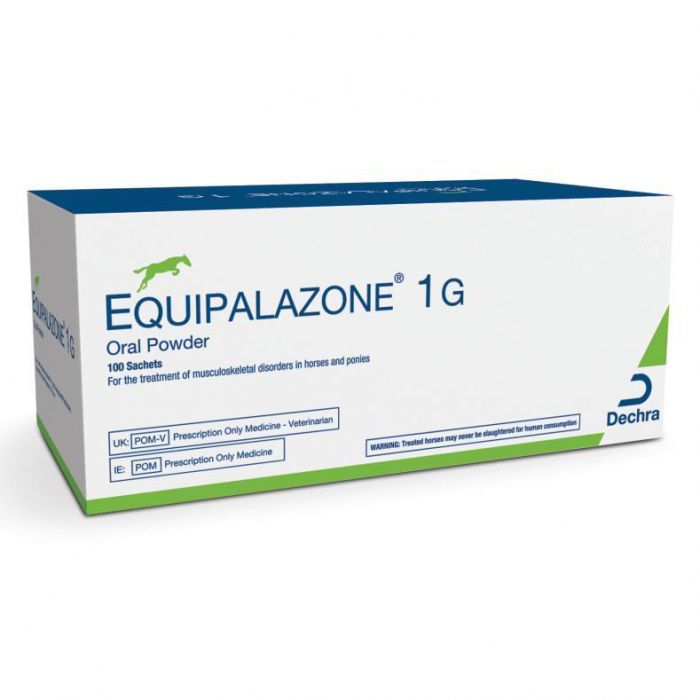
Equipalazone Oral Powder comes in individual sachets containing1g of phenylbutazone (bute). It is used in the treatment of musculo-skeletal conditions in horses and ponies.

Equipalazone  has anti-inflammatory and pain relieving properties so it is useful in the treatment of lameness due to arthritis, laminitis, bursitis, carpitis, and also after surgery. It can be given for a short period, or long-term. Usually it is dosed once daily.

Equipalazone (Bute) for Horses
50ml bottle for Injection 200mg/ml
• Usually ships in 24 hours, subject to prescription.
• Veterinary prescription from your vet required. (what's this?)
 £23.11 
(inc. VAT)
• Quick Find: 111288
Oral Paste » 6 Doses
• Usually ships in 24 hours, subject to prescription.
• Veterinary prescription from your vet required. (what's this?)
 £17.02 
(inc. VAT)
• Quick Find: 111287
Oral Powder 1g » Pack of 32 Sachets
• Usually ships in 24 hours, subject to prescription.
• Veterinary prescription from your vet required. (what's this?)
 £28.24 
(inc. VAT)
• Quick Find: 111286
Oral Powder 1g » Pack of 100 Sachets
• Usually ships in 24 hours, subject to prescription.
• Veterinary prescription from your vet required. (what's this?)
 £63.54 
(inc. VAT)
• Quick Find: 111285

Customers who purchased these items also purchased

Below is the product datasheet. This has been provided by the manufacturer and should always be provided with the medication.

Introduction

Dechra
Company name: Dechra Veterinary Products Limited
Address: (A business unit of Dechra Pharmaceuticals PLC)
Sansaw Business Park
Hadnall, Shrewsbury
Shropshire SY4 4AS
Telephone: 01939 211200
Fax: 01939 211201
Email: info@dechra-uk.com
Website: www.dechra.com

Presentation

A clear, colourless to pale yellow, sterile, aqueous solution for injection, containing:
Active substance: Phenylbutazone 200 mg/ml
Preservative: Benzyl alcohol 0.015 ml/ml (1.5 % v/v)

Uses

Equipalazone 200 mg/ml solution for injection is indicated in the treatment of musculoskeletal disorders in horses and ponies where the anti-inflammatory and analgesic properties of phenylbutazone can offer relief against inflammation, pain and lameness (for example, osteoarthritis, acute and chronic laminitis, bursitis and carpitis).

Dosage and administration

Horses: 450 kg (1000 lb) body weight:
Maximum 10 ml (4.4 mg phenylbutazone/kg)
Ponies: 225 kg (500 lb) body weight:
Maximum 5 ml (4.4 mg phenylbutazone/kg)
Equipalazone 200 mg/ml solution for injection should be administered by very slow intravenous injection as a single dose, which may be followed if necessary by oral phenylbutazone therapy commencing 24 hours after the injection.
In acute cases and in hospitalised animals, Equipalazone 200 mg/ml solution for injection may be administered once daily for not more than five consecutive days.
Observe aseptic conditions.

Contraindications, warnings, etc

Not to be used in horses intended for human consumption. Treated horses may never be slaughtered for human consumption. The horse must have been declared as not intended for human consumption under national horse passport legislation.
The therapeutic index of phenylbutazone is low.
Do not exceed the stated dose or the duration of treatment.
There is a risk of irritancy if the injection is accidentally inoculated under the skin during intravenous injection.
Do not use in animals suffering from cardiac, hepatic or renal disease, where there is the possibility of gastrointestinal ulceration or bleeding, or where there is evidence of a blood dyscrasia or hypersensitivity to the product.
Do not administer other NSAIDs concurrently or within 24 hours of each other.
Some NSAIDs may be highly bound to plasma proteins and compete with other highly bound drugs to produce an increase in non-bound pharmacologically active concentrations, which can lead to toxic effects.
Gastrointestinal tract ulceration may be exacerbated by corticosteroids in animals given non-steroidal anti-inflammatory drugs.
Use in animals less than six weeks of age, or in aged animals, may involve additional risk. If such use cannot be avoided, animals may require a reduced dosage and careful clinical management.
Avoid use in any dehydrated, hypovolaemic or hypotensive animal as there is a risk of increased toxicity.
The safety of phenylbutazone in pregnancy has not been established. The compound has been shown to have no effect on the initiation or regularity of the oestrus cycle in the mare. Phenylbutazone has been shown to cross the placenta. Use during pregnancy should be avoided whenever possible, particularly during the first trimester.
Concurrent administration of potentially nephrotoxic drugs should be avoided.
It is preferable that NSAIDs which inhibit prostaglandin synthesis are not administered to animals undergoing general anaesthesia until fully recovered.
Discontinue treatment if no response is evident after four to five days treatment.
Response to long-term therapy should be monitored at regular intervals by a veterinary practitioner.
Overdose: The therapeutic index of phenylbutazone is low. In man, charcoal haemoperfusion in conjunction with dopamine has been used to treat overdosage with phenylbutazone, but there is no experience of this technique in the horse.
Special precautions to be taken by the person administering the veterinary medicinal product to animals: The product should be handled with care at all times to reduce the risk of accidental ingestion, skin contact or self-injection. If accidental skin or eye contact occurs, the site should be washed immediately with water. If the product is self-injected or ingested, seek medical advice and show the product packaging.
Advice to doctors: gastric lavage (emesis in children) should be performed urgently. Charcoal haemoperfusion has also been shown to be beneficial. Treatment should then be administered symptomatically.
General precautions: For animal treatment only.
Keep out of the reach and sight of children.
NSAIDs can cause inhibition of phagocytosis and hence in the treatment of inflammatory conditions associated with bacterial infections, appropriate concurrent antimicrobial therapy should be instigated.
Rarely, collapse following intravenous injection has been reported. The product should be injected slowly over as long a period as is reasonably practical. At the first signs of intolerance, the administration of the injection should be interrupted.
Withdrawal period: Not to be used in horses intended for human consumption. Treated horses may never be slaughtered for human consumption. The horse must have been declared as not intended for human consumption under national horse passport legislation.

Pharmaceutical precautions

Store between +2 and +8°C. Protect from light.
Once the vial is broached, following withdrawal of the first dose use the product within 28 days. Discard unused material. Do not use after the expiry date stated on the label after EXP.
Disposal: Dispose of any unused product and empty containers in accordance with guidance from your national waste regulation authority.

Legal category

POM-V

Packaging quantities

Multidose vials of 50 ml.

Further information

The clinical effect of phenylbutazone can be evident for at least three days following cessation of administration. This should be borne in mind when examining horses for soundness.
Some authorities (including the Jockey Club) regard phenylbutazone as a "prohibited substance" under the rules of competition. Therefore, use of this product in a competition horse should be in accordance with the recommendations/advice of the relevant competition authorities.
To be supplied only on veterinary prescription.
Veterinary medicinal product authorised for use in UK and IE.
Manufacturers: Ashton Pharmaceuticals Limited, Vale of Bardsley, Ashton-under-Lyne, Lancashire, OL7 9RR.
Produlab Pharma BV, Forellenweg 16, 4941 SJ Raamsdonksveer, The Netherlands.

Marketing authorisation holder (if different from distributor)

Dechra Limited, Dechra House, Jamage Industrial Estate, Talke Pits, Stoke-on-Trent, Staffordshire, ST7 1XW.

Marketing authorisation number

Vm 10434/4007.

Equipalazone (Bute) for Horses » 50ml bottle for Injection 200mg/ml

Below is the product datasheet. This has been provided by the manufacturer and should always be provided with the medication.

Introduction

Dechra
Company name: Dechra Veterinary Products Limited
Address: (A business unit of Dechra Pharmaceuticals PLC)
Sansaw Business Park
Hadnall, Shrewsbury
Shropshire SY4 4AS
Telephone: 01939 211200
Fax: 01939 211201
Email: info@dechra-uk.com
Website: www.dechra.com

Presentation

Palatable paste for oral administration, containing per unit dose:
Active substance: Phenylbutazone 1 g
Preservatives:
Sodium methyl parahydroxybenzoate 0.006 g
Sodium propyl parahydroxybenzoate 0.0015 g
Off-white paste prefilled into 32 ml syringes.

Uses

Equipalazone 1 g oral paste is indicated in the treatment of musculoskeletal disorders in horses and ponies where the anti-inflammatory and analgesic properties of phenylbutazone can offer relief, for example, in lameness associated with osteoarthritic conditions, acute and chronic laminitis, bursitis and carpitis.

Dosage and administration

Each marked division (2 turns of the ring) is equivalent to 1 unit dose (i.e. 1 g phenylbutazone).
Horses: 450 kg (1000 lb) body weight:
2 unit doses twice on day one (equivalent to 8.8 mg/kg/day), 1 unit dose twice daily for four days (4.4 mg/kg/day) followed by 1 unit dose daily or on alternate days (2.2 mg/kg/day), sufficient to keep the animal comfortable.
Ponies: 225 kg (500 lb) body weight:
1 unit dose (4.4 mg/kg) on alternate days.
Remove cap from nozzle, turn ring to required dosage and express as near to the back of the tongue as possible. Replace cap after use.
Adjust dose according to body weight.
Discontinue treatment if no response is evident after four to five days treatment.
Avoid the introduction of contamination during use.

Contraindications, warnings, etc

Not to be used in horses intended for human consumption. Treated horses may never be slaughtered for human consumption. The horse must have been declared as not intended for human consumption under national horse passport legislation.
The therapeutic index of phenylbutazone is low.
Do not exceed the stated dose or the duration of treatment.
Use is contraindicated in animals suffering from cardiac, hepatic or renal disease, where there is the possibility of gastrointestinal ulceration or bleeding, or where there is evidence of a blood dyscrasia or hypersensitivity to the product.
Do not administer other NSAIDs concurrently or within 24 hours of each other.
Some NSAIDs may be highly bound to plasma proteins and compete with other highly bound drugs to produce an increase in non-bound pharmacologically active concentrations, which can lead to toxic effects.
Use in animals less than six weeks of age, or in aged animals, may involve additional risk. If such use cannot be avoided, animals may require a reduced dosage and careful clinical management.
Avoid use in any dehydrated, hypovolaemic or hypotensive animal as there is a risk of increased toxicity.
Concurrent administration of potentially nephrotoxic drugs should be avoided.
It is preferable that NSAIDs which inhibit prostaglandin synthesis are not administered to animals undergoing general anaesthesia until fully recovered.
The safety of phenylbutazone in pregnancy has not been established. Use during pregnancy should be avoided whenever possible, particularly during the first trimester.
Response to long-term therapy should be monitored at regular intervals by a veterinary practitioner.
Dosage should be discontinued in animals developing gastrointestinal or vascular disorders, oral ulceration or inappetance during treatment.
Gastrointestinal tract ulceration may be exacerbated by corticosteroids in animals given non-steroidal anti-inflammatory drugs.
Overdose: The therapeutic index of phenylbutazone is low. In man, charcoal haemoperfusion in conjunction with dopamine has been used to treat overdosage. There is no experience of this technique in the horse.
Special precautions to be taken by the person administering the veterinary medicinal product to animals: The product should be handled with care at all times to reduce the risk of accidental ingestion or skin contact. If accidental skin or eye contact occurs, the site should be washed immediately with water. If the product is ingested, seek medical advice immediately and show the product packaging.
Advice to doctors: gastric lavage (emesis in children) should be performed urgently. Charcoal haemoperfusion has also been shown to be beneficial. Treatment should then be administered symptomatically.
General precautions: For animal treatment only.
Keep out of the reach and sight of children.
NSAIDs can cause inhibition of phagocytosis and hence in the treatment of inflammatory conditions associated with bacterial infections, appropriate concurrent antimicrobial therapy should be instigated.
Withdrawal period: Not to be used in horses intended for human consumption. Treated horses may never be slaughtered for human consumption. The horse must have been declared as not intended for human consumption under national horse passport legislation.

Pharmaceutical precautions

Do not store above 25°C. Any contents remaining later than 28 days after the first opening should be discarded. Do not use after the expiry date stated on the label after EXP.
Disposal: Dispose of any unused product and empty containers in accordance with guidance from your national waste regulation authority.

Legal category

POM-V

Packaging quantities

Dial-a-dose syringes containing 6 unit doses.

Further information

The clinical effect of phenylbutazone can be evident for at least three days following cessation of administration. This should be borne in mind when examining the horse for soundness.
Some authorities (including the Jockey Club) regard phenylbutazone as a "prohibited substance" under the rules of competition. Therefore, use of this product in a competition horse should be in accordance with the recommendations/advice of the relevant competition authorities.
To be supplied only on veterinary prescription.
Veterinary medicinal product authorised for use in UK and IE.
For any information about this veterinary medicinal product, please contact the local representative of the marketing authorisation holder.
Manufacturer responsible for batch release: Dales Pharmaceuticals, Snaygill Industrial Estate, Keighley Road, Skipton, North Yorkshire, BD23 2RW.

Marketing authorisation holder (if different from distributor)

Dechra Limited, Dechra House, Jamage Industrial Estate, Talke Pits, Stoke-on-Trent, Staffordshire, ST7 1XW

Marketing authorisation number

Vm 10434/4006.

Equipalazone (Bute) for Horses » Oral Paste » 6 Doses

Below is the product datasheet. This has been provided by the manufacturer and should always be provided with the medication.

Introduction

Dechra
Company name: Dechra Veterinary Products Limited
Address: (A business unit of Dechra Pharmaceuticals PLC)
Sansaw Business Park
Hadnall, Shrewsbury
Shropshire SY4 4AS
Telephone: 01939 211200
Fax: 01939 211201
Email: info@dechra-uk.com
Website: www.dechra.com

Presentation

Free flowing white/cream powder for oral administration, containing per sachet:
Active substance: Micro-encapsulated Phenylbutazone 1 g
Preservative: Sodium paracombin 0.15 % w/w
Sodium paracombin contains: Methyl parahydroxybenzoate 31.5 % w/v, Ethyl parahydroxybenzoate 27.5 % w/v, Propyl parahydroxybenzoate 19.7 % w/v

Uses

Equipalazone® 1 g oral powder is indicated in the treatment of musculoskeletal disorders in horses and ponies where the anti-inflammatory and analgesic properties of phenylbutazone can offer relief, for example, in lameness associated with osteoarthritic conditions, acute and chronic laminitis, bursitis and carpitis, and in the reduction of post-surgical soft tissue reaction.

Dosage and administration

For oral administration only. Dependent on individual response, but as a guide:
Horses: 450 kg (1000 lb) body weight:
Two sachets to be administered twice on day one (equivalent to 8.8 mg/kg/day) followed by one sachet twice daily for four days (4.4 mg/kg/day), then one sachet daily or on alternate days sufficient to keep the horse comfortable (2.2 mg/kg/day).
Ponies: 225 kg (500 lb) body weight:
One sachet (4.4 mg/kg/day) on alternate days.
Adjust dose according to body weight.
Discontinue treatment if no response is evident after four to five days treatment.
For ease of administration, Equipalazone® 1 g oral powder should be mixed with a small quantity of feed.

Contraindications, warnings, etc

Not to be used in horses intended for human consumption. Treated horses may never be slaughtered for human consumption. The horse must have been declared as not intended for human consumption under national horse passport legislation.
The therapeutic index of phenylbutazone is low.
Do not exceed the stated dose or the duration of treatment.
Do not use in animals suffering from cardiac, hepatic or renal disease, where there is the possibility of gastrointestinal ulceration or bleeding, or where there is evidence of a blood dyscrasia or hypersensitivity to the product.
Do not administer other NSAIDs concurrently or within 24 hours of each other.
Some NSAIDs may be highly bound to plasma proteins and compete with other highly bound drugs to produce an increase in non-bound pharmacologically active concentrations, which can lead to toxic effects.
Use in any animal less than six weeks of age, or in aged animals, may involve additional risk. If such use cannot be avoided, animals may require a reduced dosage and careful clinical management.
Avoid use in any dehydrated, hypovolaemic or hypotensive animal as there is a risk of increased toxicity.
Concurrent administration of potentially nephrotoxic drugs (e.g. aminoglycoside antibiotics) should be avoided.
It is preferable that NSAIDs which inhibit prostaglandin synthesis are not administered to animals undergoing general anaesthesia until fully recovered.
Gastrointestinal tract ulceration may be exacerbated by corticosteroids in animals given NSAIDs.
The safety of phenylbutazone in pregnancy has not been established. Use during pregnancy should be avoided whenever possible, particularly during the first trimester.
Response to long-term therapy should be monitored at regular intervals by a veterinary practitioner.
Overdose: The therapeutic index of phenylbutazone is low. In man, charcoal haemoperfusion in conjunction with dopamine has been used to treat overdosage with phenylbutazone, but there is no experience of this technique in the horse.
Incompatibilities: There are no known incompatibilities. Equipalazone® Powder should only be mixed with dry foodstuffs, to prevent premature solution of the encapsulation coat.
Special precautions to be taken by the person administering the veterinary medicinal product to animals: The product should be handled with care at all times to reduce the risk of accidental ingestion, skin contact or dust inhalation. If accidental skin or eye contact occurs, the site should be washed immediately with water. If the product is ingested, seek medical advice immediately and show the product packaging.
Advice to doctors: gastric lavage (emesis in children) should be performed urgently. Charcoal haemoperfusion has also been shown to be beneficial. Treatment should then be administered symptomatically.
General precautions: For animal treatment only.
Keep out of the reach and sight of children.
NSAIDs can cause inhibition of phagocytosis and hence in the treatment of inflammatory conditions associated with bacterial infections appropriate concurrent antimicrobial therapy should be instigated.
Withdrawal period: Not to be used in horses intended for human consumption. Treated horses may never be slaughtered for human consumption. The horse must have been declared as not intended for human consumption under national horse passport legislation.

Pharmaceutical precautions

Do not store above 25°C. Store in a dry place.
Disposal: Dispose of any unused product and empty containers in accordance with guidance from your national waste regulation authority.

Legal category

POM-V

Packaging quantities

Boxes of 32 and 100 sachets.

Further information

When mixed with a concentrate feed, the product was shown to be palatable to horses.
The clinical effect of phenylbutazone can be evident for at least three days following cessation of administration. This should be borne in mind when examining horses for soundness.
Some authorities (including the Jockey Club) regard phenylbutazone as a “prohibited substance” under the rules of competition. Therefore, use of this product in a competition horse should be in accordance with the recommendations/advice of the relevant competition authorities.
To be supplied only on veterinary prescription.
Veterinary medicinal product authorised for use in UK and IE.

Marketing authorisation holder (if different from distributor)

Dechra Limited, Dechra House, Jamage Industrial Estate, Talke Pits, Stoke-on-Trent, Staffordshire, ST7 1XW.

Marketing authorisation number

Vm 10434/4005.

Equipalazone (Bute) for Horses » Oral Powder 1g » Pack of 32 Sachets

Below is the product datasheet. This has been provided by the manufacturer and should always be provided with the medication.

Introduction

Dechra
Company name: Dechra Veterinary Products Limited
Address: (A business unit of Dechra Pharmaceuticals PLC)
Sansaw Business Park
Hadnall, Shrewsbury
Shropshire SY4 4AS
Telephone: 01939 211200
Fax: 01939 211201
Email: info@dechra-uk.com
Website: www.dechra.com

Presentation

Free flowing white/cream powder for oral administration, containing per sachet:
Active substance: Micro-encapsulated Phenylbutazone 1 g
Preservative: Sodium paracombin 0.15 % w/w
Sodium paracombin contains: Methyl parahydroxybenzoate 31.5 % w/v, Ethyl parahydroxybenzoate 27.5 % w/v, Propyl parahydroxybenzoate 19.7 % w/v

Uses

Equipalazone® 1 g oral powder is indicated in the treatment of musculoskeletal disorders in horses and ponies where the anti-inflammatory and analgesic properties of phenylbutazone can offer relief, for example, in lameness associated with osteoarthritic conditions, acute and chronic laminitis, bursitis and carpitis, and in the reduction of post-surgical soft tissue reaction.

Dosage and administration

For oral administration only. Dependent on individual response, but as a guide:
Horses: 450 kg (1000 lb) body weight:
Two sachets to be administered twice on day one (equivalent to 8.8 mg/kg/day) followed by one sachet twice daily for four days (4.4 mg/kg/day), then one sachet daily or on alternate days sufficient to keep the horse comfortable (2.2 mg/kg/day).
Ponies: 225 kg (500 lb) body weight:
One sachet (4.4 mg/kg/day) on alternate days.
Adjust dose according to body weight.
Discontinue treatment if no response is evident after four to five days treatment.
For ease of administration, Equipalazone® 1 g oral powder should be mixed with a small quantity of feed.

Contraindications, warnings, etc

Not to be used in horses intended for human consumption. Treated horses may never be slaughtered for human consumption. The horse must have been declared as not intended for human consumption under national horse passport legislation.
The therapeutic index of phenylbutazone is low.
Do not exceed the stated dose or the duration of treatment.
Do not use in animals suffering from cardiac, hepatic or renal disease, where there is the possibility of gastrointestinal ulceration or bleeding, or where there is evidence of a blood dyscrasia or hypersensitivity to the product.
Do not administer other NSAIDs concurrently or within 24 hours of each other.
Some NSAIDs may be highly bound to plasma proteins and compete with other highly bound drugs to produce an increase in non-bound pharmacologically active concentrations, which can lead to toxic effects.
Use in any animal less than six weeks of age, or in aged animals, may involve additional risk. If such use cannot be avoided, animals may require a reduced dosage and careful clinical management.
Avoid use in any dehydrated, hypovolaemic or hypotensive animal as there is a risk of increased toxicity.
Concurrent administration of potentially nephrotoxic drugs (e.g. aminoglycoside antibiotics) should be avoided.
It is preferable that NSAIDs which inhibit prostaglandin synthesis are not administered to animals undergoing general anaesthesia until fully recovered.
Gastrointestinal tract ulceration may be exacerbated by corticosteroids in animals given NSAIDs.
The safety of phenylbutazone in pregnancy has not been established. Use during pregnancy should be avoided whenever possible, particularly during the first trimester.
Response to long-term therapy should be monitored at regular intervals by a veterinary practitioner.
Overdose: The therapeutic index of phenylbutazone is low. In man, charcoal haemoperfusion in conjunction with dopamine has been used to treat overdosage with phenylbutazone, but there is no experience of this technique in the horse.
Incompatibilities: There are no known incompatibilities. Equipalazone® Powder should only be mixed with dry foodstuffs, to prevent premature solution of the encapsulation coat.
Special precautions to be taken by the person administering the veterinary medicinal product to animals: The product should be handled with care at all times to reduce the risk of accidental ingestion, skin contact or dust inhalation. If accidental skin or eye contact occurs, the site should be washed immediately with water. If the product is ingested, seek medical advice immediately and show the product packaging.
Advice to doctors: gastric lavage (emesis in children) should be performed urgently. Charcoal haemoperfusion has also been shown to be beneficial. Treatment should then be administered symptomatically.
General precautions: For animal treatment only.
Keep out of the reach and sight of children.
NSAIDs can cause inhibition of phagocytosis and hence in the treatment of inflammatory conditions associated with bacterial infections appropriate concurrent antimicrobial therapy should be instigated.
Withdrawal period: Not to be used in horses intended for human consumption. Treated horses may never be slaughtered for human consumption. The horse must have been declared as not intended for human consumption under national horse passport legislation.

Pharmaceutical precautions

Do not store above 25°C. Store in a dry place.
Disposal: Dispose of any unused product and empty containers in accordance with guidance from your national waste regulation authority.

Legal category

POM-V

Packaging quantities

Boxes of 32 and 100 sachets.

Further information

When mixed with a concentrate feed, the product was shown to be palatable to horses.
The clinical effect of phenylbutazone can be evident for at least three days following cessation of administration. This should be borne in mind when examining horses for soundness.
Some authorities (including the Jockey Club) regard phenylbutazone as a “prohibited substance” under the rules of competition. Therefore, use of this product in a competition horse should be in accordance with the recommendations/advice of the relevant competition authorities.
To be supplied only on veterinary prescription.
Veterinary medicinal product authorised for use in UK and IE.

Marketing authorisation holder (if different from distributor)

Dechra Limited, Dechra House, Jamage Industrial Estate, Talke Pits, Stoke-on-Trent, Staffordshire, ST7 1XW.

Marketing authorisation number

Vm 10434/4005.

Equipalazone (Bute) for Horses » Oral Powder 1g » Pack of 100 Sachets
      Page loaded on Friday 25th May 2012 at 5:15am Top      
Find VioVet on Facebook VioVet medication dispensing under control of John Cousins, BVSc, MRCVS.
Web & IT systems development and maintenance by Luke Cousins.
Address: VioVet, 3 London Road, Markyate, Hertfordshire, AL3 8JL.

Copyright © 2005-2012 VioVet. All rights reserved.

You can call us on 0800 084 2608 or fax us on 0845 384 7004. Calls may be recorded. Both the calls and fax number are freephone numbers so you will not be charged.

 |  Terms and Conditions  |  Delivery Information  |  Privacy Policy  |  Resources  |  Contact Us  | 

Payment Types Accepted